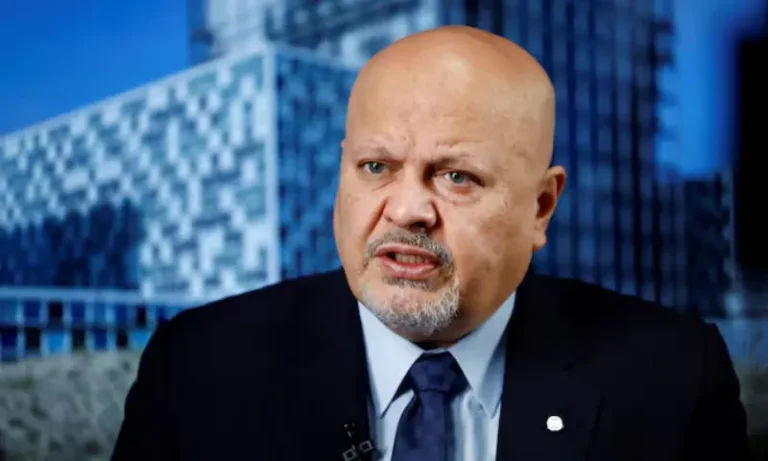

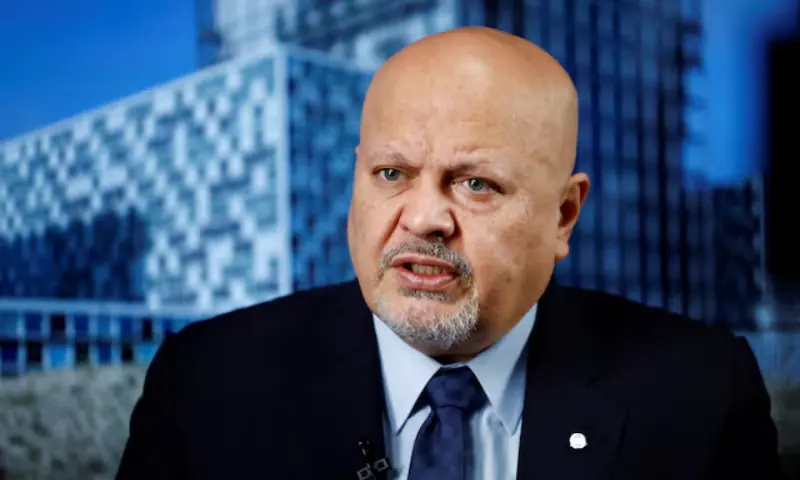
Member states of the International Criminal Court (ICC) will vote on Friday on whether to fire chief prosecutor Karim Khan for alleged sexual misconduct in a case that has damaged the tribunal’s credibility at a time when the US has ramped up its attacks on the court. Khan, 56, denies any wrongdoing. The vote on his fate comes just a week after Washington announced a renewed diplomatic campaign to dismantle the ICC, which it says is a threat to US sovereignty. “The court is already in a precarious state,” Mark Ellis, the executive director of the International Bar Association and a longtime ICC observer, told Reuters. “The Khan situation is a separate but very significant part of the overall perception of the court’s credibility,” he added. The US has said no diplomatic options are off the table in its campaign against the ICC, which has already seen 11 of the ICC’s top officials facing sanctions. Accuser points to power disparity, Khan denies wrongdoing The Khan vote also lays bare internal divisions among the court’s governing bodies and its member states. While officials from the court’s governing body said Khan should be dismissed because he committed serious misconduct, according to documents seen by Reuters, it remains unclear if member states will follow that recommendation. For him to be removed, an absolute majority of at least 63 of the court’s 125 member states will have to agree in the secret ballot to be held at a meeting at the UN headquarters in New York. The vote is due around 3 pm (1900 GMT). Khan’s accuser, a junior ICC staffer, spoke publicly for the first time last week in an interview with CNN in which she repeated her allegations that the prosecutor had a non-consensual sexual relationship with her. “There is no way for something to be consensual when you have such a power disparity,” the woman, identified only by her first name Sarah, told CNN. Lawyers for Khan told Reuters he denied “any sexual relationship of any kind” with the alleged victim. They called the decision that led to Friday’s vote unlawful, procedurally unfair and unsupported by evidence, and pointed to a panel of independent judges who found there was no evidence to establish the allegations beyond reasonable doubt after a report by UN investigators into the matter. Vote will not end ICC’s internal turmoil Whatever the outcome, the vote will not put an end to internal divisions. If ICC member states dismiss Khan, it will be seen by some as the result of political pressure after Khan sought arrest warrants for senior Israeli officials for alleged war crimes committed in Gaza. Israel is not a member of the court and has dismissed the warrants as bogus. It would also set off an election process for a new prosecutor, which is not expected to finish before the start of next year. If Khan survives the vote, his position would be weakened and it would give critics of the court another stick to beat it with. The ICC was established in 2002 by the international community to prosecute war crimes, genocide and crimes against humanity. It asserts jurisdiction only if one of its 125 member states is unable or unwilling to prosecute atrocities itself. The United States has never been a member of the court. However, the ICC statute also gives the court the power to prosecute atrocity crimes committed on the territory of member states by nationals of non-member states. A State Department official, speaking on condition of anonymity, said last week Washington was considering diplomatic pressure on other nations to withdraw from the court. The EU has reiterated its support for the ICC and said threats against the court or its elected officials are not acceptable. However, the EU and most ICC member states have yet to take concrete public steps that could shield the institution. The International Federation for Human Rights, a human rights NGO working with victims in cases being considered by the ICC, called the new US campaign the most serious attack to date on the world’s only permanent international criminal court. “States created the ICC together; they now have the opportunity — and the responsibility — to defend it together,” Secretary General Drissa Traore said.
Source: Original report
About the Author