
Iran appreciates Pakistan’s efforts to mediate between Tehran and Washington has drawn attention as part of the latest developments being reported. Below is a cleaned summary based on the feed item.
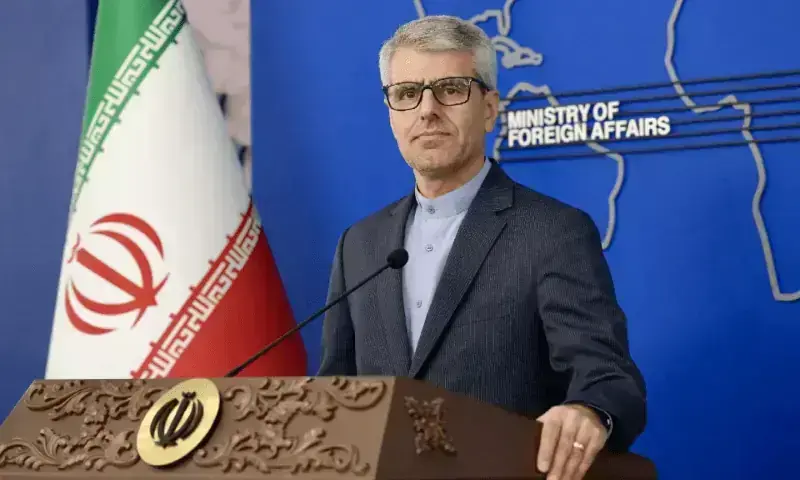
Iran’s foreign ministry spokesman Esmaeil Baqaei said on Wednesday that the Islamic republic appreciated Pakistan’s efforts to end the Middle East war, without commenting on a ceasefire extension announced by the United States. He expressed these views while answering reporters’ questions, a statement by Iran’s foreign ministry said, adding that Baqaei was asked about Pakistan’s request to extend a ceasefire agreed between Tehran and Washington on April 8. Iranian foreign ministry’s statement said that while “expressing gratitude for Pakistan’s gracious efforts and mediation attempts to end the imposed war and establish peace in the region”, Baqaei stressed that Tehran “is taking the necessary measures to safeguard Iran’s national interests and security”. He added that Iranian armed forces stood “ready to comprehensively and decisively defend the nation’s integrity against any threat or hostility”. When asked about the possibility of a second round of talks with the US, the statement said, Baqaei replied: “Diplomacy is a tool to secure national interests and security, and whenever we conclude that the necessary and logical groundwork is in place to use this tool for realising national interests and consolidating the Iranian nation’s achievements in frustrating enemies from achieving their sinister goals, we will take action.“ He emphasised that Iran had not initiated the war and that all of Tehran’s actions “have been carried out in line with its inherent right to legitimate self-defence against military aggression by the United States and the Israeli regime”. Baqaei was further quoted as saying that “Iran will use every opportunity and capacity to hold aggressors accountable, secure Iran’s rights — including delivering justice for perpetrators and instigators of war crimes — and demand compensation”. The statement comes after an extension in the ceasefire was announced by US President Donald Trump early on Wednesday. In a post on his Truth Social platfomrm, Trump said: “Based on the fact that the Government of Iran is seriously fractured, not unexpectedly so and, upon the request of Field Marshal Asim Munir, and Prime Minister Shehbaz Sharif, of Pakistan, we have been asked to hold our Attack on the Country of Iran until such time as their leaders and representatives can come up with a unified proposal. “I have therefore directed our Military to continue the Blockade and, in all other respects, remain ready and able, and will therefore extend the Ceasefire until such time as their proposal is submitted, and discussions are concluded, one way or the other.” Trump’s statement came as the Pakistan-brokered ceasefire agreed on April 8 neared its deadline. The original deadline for the ceasefire was set for April 21 8pm ET, but Trump said on Monday that it was to continue till “Wednesday evening Washington time”. He had also said he would not extend the truce beyond that, but eventually extended it on Wednesday. On the other hand, Pakistan Information Minister Attaullah Tarar said on Tuesday that the ceasefire was to end at 4:50am PST on April 22. The developments took place amid anticipation of a second round of talks between Washington and Tehran in Islamabad to end hostilities — largely paused for now — that began with the US-Israeli strikes on Iran on February 28. However, uncertainty has prevailed over the prospect of parleys with the arrival of the US negotiators to Islamabad having been put off on Wednesday and no confirmation by Tehran about its participation. The first round of historic direct US-Iran talks, held in Islamabad on April 11 and 12, had ended without an agreement, but also without a breakdown, as a Pakistan-brokered ceasefire remained in effect. After the first round of talks, Pakistan’s civil and military leadership engaged in feverish diplomacy, seeking to bring the US and Iran back to the negotiating table. Pakistan initially positioned itself as a facilitator in the peace process, but later, the White House and Iran acknowledged it as the “sole mediator” in the process. Leading up to the ceasefire extension, Pakistan spent the day reaching out to both parties to keep the peace process on track, as both sides appeared rigid in their stance. However, an impasse remains. At the centre of the deadlock is the US maritime blockade of Iranian ports and a series of interdictions targeting vessels linked to Iran, which Tehran viewed as a violation of the ceasefire spirit and an attempt to make Iran negotiate under coercion. Iran Parliament Speaker Mohammad Bagher Ghalibaf, who was also the top negotiator during the first round of US-Iran talks, said in a post on X on Wednesday that a “complete ceasefire only makes sense if it is not violated by the maritime blockade and the hostage-taking of the world’s economy and if the zionist warmongering across all fronts is halted; reopening the Strait of Hormuz is impossible with such a flagrant breach of the ceasefire”. He added, “They did not achieve their goals through military aggression, nor will they through bullying. The only way forward is to recognise the rights of the Iranian nation.” Unrestricted navigation through the Strait of Hormuz has also emerged as one of the issues at the core of the impasse between the US and Iran, and another point of contention is Washington’s demand for long-term commitments on Iran’s nuclear programme, including constraints on enrichment and safeguards against weaponisation. Following Ghalibaf’s statement, Iranian President Masoud Pezeshkian posted on X that “breach of commitments, blockade and threats” were the main obstacles to “genuine negotiations”. “The Islamic Republic of Iran has welcomed dialogue and agreement and continues to do so. Breach of commitments, blockade and threats are the main obstacles to genuine negotiations. The world sees your endless hypocritical rhetoric and contradiction between claims and actions,” he stated.
Why this matters
This update matters because iran’s foreign ministry spokesman Esmaeil Baqaei said on Wednesday that the Islamic republic appreciated Pakistan’s efforts to end the Middle East war, without commenting on a ceas
Source: Original report
About the Author